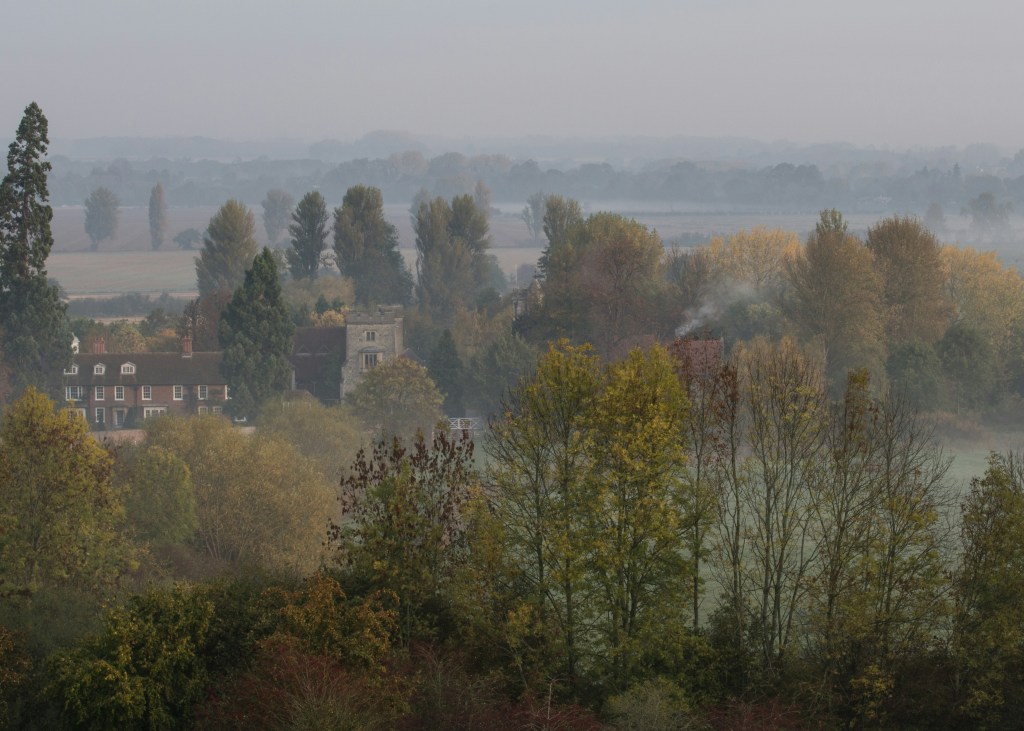
(Cover image by Kevin Hessey on Unsplash)
Hello all! It’s been about nine months since my first published short story, The Arkham Autumn Festival, made its sparkling print debut (you can read it here on the blog, or in the Halloween 2025 edition of Lovecraftiana, available digitally on KU and in print!) Today, I wanted to talk about the inspirations for this story, and how it ultimately came together.
Inspiration #1: The Man Himself
Given that The Arkham Autumn Festival is literally genre-classified as Lovecraftian horror, I would be amiss if I didn’t at least mention this. I was first introduced to H.P. Lovecraft’s work sometime in the mid-2010s, and for all the man’s faults, I find the expanded oeuvre around his work utterly fascinating. TAAF was formally born when I answered a call for submission to the prompt “Arkham Institutions”, which invited submitters to reflect on what daily life might look like for the citizens of Arkham, H.P. Lovecraft’s fictional town of monster-worshippers and conjurers.
This prompt was right up my alley. One of Lovecraft’s primary tools for invoking his signature sense of creeping dread is to have an outsider come into a town and have things seem normal, except for one or two small things. It’s a real product of its Gilded-Age time, the slow scratching away of a golden patina to reveal the gaping, unknowable horror underneath. I found a great deal of comedy in the idea of writing a story from the other side, to see a cast of characters running themselves ragged to keep the facade in place as the stage comes crashing down around them, and this is the touchstone I kept returning to as I walked the horror-comedy tightrope of the story’s tone.
Inspiration #2: The Salt Princess Festival
TAAF was heavily influenced by my internship as a research assistant during my associate’s degree. As part of my independent research, I learned about a festival similar to the one I depict, known as the Salt Princess, or No-Ni-Shee Festival, which I have included in a sister post here on the blog! Check it out!
The Salt Princess Festival story has everything– Indigenous exoticism, the early art of Gilded Age-artist John Held, Jr., and a sparkling balsa-wood arch– but it was primarily my focus on pre-war boosterism culture that inspired TAAF. During the early 1910s, the States were experiencing an economic upswing, and everybody wanted a piece of that pie. You can see remnants of this push all over our culture even still; just look at tourism campaigns, hometown pride, summer parades, “World’s Largest” attractions. Everybody wants acclaim, everybody wants to be the focus of regional, statewide, national talk, everybody needs the money that tourism brings in. In the 1910s through the 1920s, that craze was at an all-time high.
With my thoughts still mired in all the research I’d done for the No-Ni-Shee project, I realized that if it were real, Lovecraft’s early-century vision of Arkham might have experienced a similar “boosterism” craze, and I wondered at the ways things might differ, considering the town’s esoteric history. Is it possible to want to boost the visual and economic profile of your town while maintaining the order’s secrets? How does one reconcile this increase in visibility when, traditionally, you’ve relied on silence and secrecy to keep your beliefs safe?
This is how our main character Simon came to be. Simon loves Arkham wholeheartedly, but he does not feel fully at home there. He has little excuse to question the monster-worshipping cult he was raised in, and he largely doesn’t, but he’s also always had one eye on the outside world. He’s aware of the town’s reputation, knows too that it’s been earned, but doesn’t want to let that stop them from advancing into the 20th century. Watching Arkham’s floundering economy with an eagle eye, Simon learns to fear stagnation above all else, much in the ways I imagined the planners of the Salt Princess festival, (particularly Herbert Auerbach), felt.
Inspiration #3: Romancing the Beat, by Gwen Hayes
We are introduced to Simon’s direct foil, Gideon, as Simon begins his quest to salvage the festival from his own father’s shenanigans. Gideon is seemingly Simon’s opposite in every way– he grew up outside of Arkham, but his own brushes with the supernatural brought him to Miskatonic University and eventually to opportunities for employment in town. He’s something of the ideal convert, and it’s endeared him towards the town in ways that Simon never quite accomplished. Gideon’s character is more closely inspired by Fisher West, the Virginia transplant who wanted to make Utah the commercial hub of the American West.
The push and pull of Simon and Gideon’s dynamic quickly became the central focus of the story as I drafted. The playful rivalry, the mutual jealousy, the reluctant attraction, these became the heart of the story, and the primary way Simon parses his mixed feelings about his hometown.
Though the romance thread is extremely light, I couldn’t have written it without the help of Gwen Hayes’s book Romancing the Beat, which is a quick and fantastic read on romance story structure that I’ve previously talked about.
Inspiration #4: Assorted other personal experience
At the time I began drafting this story, I was dealing with a lot of similar feelings to Simon. About three years earlier I’d moved away from my home state of Utah, and as I wrote this story I had to parse the mixed emotions I had about growing up in a place I loved that, regardless of my love for it, hadn’t always seemed to love me back. I still loved it, but it became clear as I spent more time in Minnesota that being in a new place was good for me, and I felt more guilt than I expected about that.
A lot of these mixed feelings are tied up in Simon’s relationship with the other members of Arkham’s chamber of commerce. Mercy and Hosea have both known Simon since he was a child, and they clearly love him. Though they do not begrudge him his need to grow beyond Arkham, others do. This makes it difficult for Simon to know who is willing to work with him and who is not. It’s a very frustrating situation for him, one which precludes a lot of his top layer of annoyance throughout the beginning of his book. His own father is willing to mess with him that way, who’s to say whom he can actually trust?
Which is why their success at the end of the story hits Simon so hard. Despite all of his doubts, in this moment his colleagues have proved themselves to be friends. They’ve proved that they share his values and his determination to preserve Arkham for future generations, instead of seeking to destroy it for their own gain. I think as I created the end of this story, I did so out of hope that other people experiencing similar doubts about leaving or attempting to enact change in their communities would feel that they were not alone.
In Conclusion
Honestly this whole thing was an excuse to post the No-Ni-Shee Festival paper on this blog (lol). Its last home online was a personal blog of mine that I have since taken private, but I’m just so proud of the research and work that I did, and I wanted to make sure it found another home.
I hope you enjoyed! I have another literary analysis post in the works about the virtuosity of beauty and how I’ve noticed that shows up in media, and I’ve also just submitted a flash fiction piece to a literary journal that I may be sharing here if it doesn’t get picked up. Summer semester will end in a few weeks, then I’ll have a majority of August off before I jump back into fall semester, so you may see some increased activity from me then.
See you again soon! 🙂


Leave a Reply